
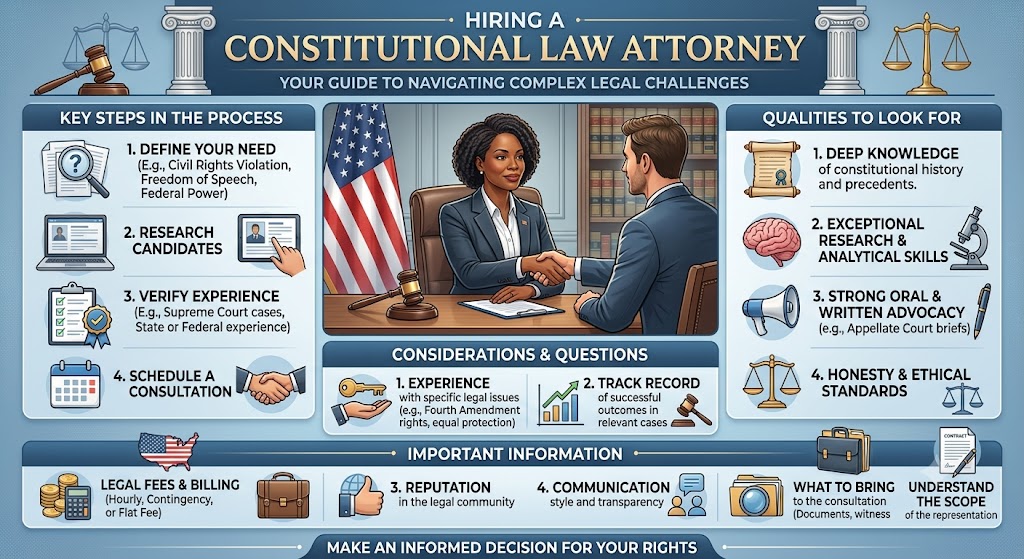
Learn how to hire a qualified constitutional law attorney. Review key strategies for checking credentials, evaluating trial experience, and clarifying fees.
Home » Article » 10 Tricks And Tips On Hiring A Constitutional Law AttorneyNeed to defend your rights? Discover 10 critical tips for hiring the right constitutional law attorney, from verifying federal court admittance to evaluating trial experience and fee structures. Hiring a constitutional law attorney necessitates locating a highly qualified counsel since these matters can entail intricate state or federal problems. To make sure they are the correct match, thoroughly screen applicants by verifying their relevant track record, assessing their pricing structures, and going over their communication methods.
There is a lot of constitutional law. Verify if the attorney is an expert in your particular area of expertise (e.g., First Amendment rights, Second Amendment problems, civil rights, or eminent domain). Look into their prior appellate litigation, teaching experience, and pertinent scholarly papers.
Verify if the lawyer is permitted to operate in the state or federal district where your lawsuit will be filed, for example. Make that they are expressly admitted to the bar of the applicable U.S. Court of Appeals or the U.S. Supreme Court if your case is headed for the appellate stage.
Motion practice and in-depth legal study are key factors in winning constitutional disputes. Instead of settling out of court, find out whether they have real litigation and trial expertise.
Use reliable directories, such as the American Bar Association or your local Bar Association, to locate qualified specialists and peer-reviewed lawyers rather than depending on generic ads.
Advertisement
 Hosting Renewal Goal: $0 / $400 raised, updated daily.
Initial consultations are provided by several constitutional law practitioners. Make a list of inquiries to assess their approach, possible case results, and the frequency of their updates.
Litigation pertaining to the constitution can be quite expensive. Find out if they charge by the hour, on a fixed fee, or on a contingency basis (if you want damages). Always ask for a signed retainer agreement that clearly outlines their fees and the precise costs you must pay.
Select a lawyer who will explain your legal alternatives to you in an understandable manner and steer clear of complicated legalese. A competent attorney will be realistic about what can be accomplished and honest about the shortcomings of your case.
Civil rights attorneys; handle violations of federal or state civil rights, such as unlawful police conduct or discrimination.
Constitutional law attorneys; focus on interpreting and applying constitutional provisions in complex cases.
Public defenders; provide free representation for criminal cases implicating constitutional rights.
Private attorneys; with civil rights specialties offer tailored, fee-for-service representation.
Legal aid and pro bono; programs can provide free or low-cost help for eligible clients.
Advertisement
Hosting Renewal Goal: $0 / $400 raised, updated daily.
Look for attorneys with:
Board certification in civil rights or constitutional law.
Experience in the specific type of case you have.
Track record in appellate or federal litigation, if relevant.
Ask for recent case results or summaries to gauge their effectiveness.
Referral services and directories of board-certified civil rights experts are frequently available through state and local bar associations.
Federal bar groups can assist with matters pertaining to federal rights.
Nonprofit advocacy organizations and legal aid societies may provide direct representation or referrals.
Supervised representation is available through public interest initiatives and law school clinics.
Make it clear if you are dealing with a public defender, utilizing legal assistance, or engaging a private counsel. Recognize any contingency fee agreements, billing schedules, and due dates. You may greatly increase your chances of selecting a constitutional law lawyer who will successfully defend your rights by combining a precise case description, using reliable referral sources, and carefully examining qualifications and experience.
Disclaimer, Consult a Licensed Professional: Legal matters are highly dependent on specific facts and individual circumstances. You should never rely solely on online articles to make legal decisions. Always consult with a qualified, licensed attorney in your specific jurisdiction to obtain advice regarding your particular legal rights, obligations, or potential cases.
Advertisement

10 Tricks and Tips on Hiring a Constitutional Law Attorney | Tricks and Tips for Life
Comments and Questions
Please log in to leave a comment or ask a question. Don't have an account? Register here.