
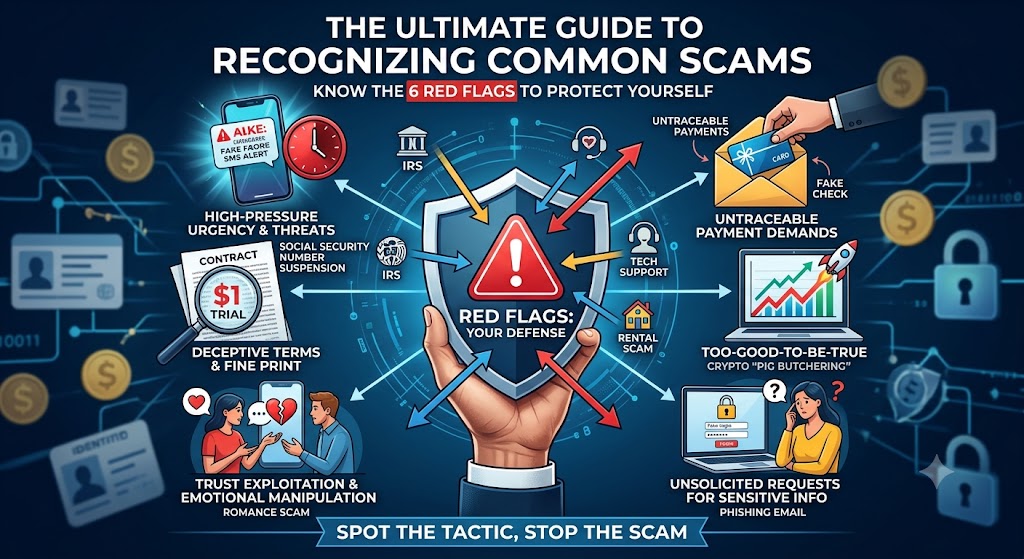
Learn how to recognize and avoid common scams in the U.S. Protect your identity and finances by mastering the 6 red flags behind 22 popular scam tactics.
Home » Article » Avoiding ScamsThe purpose of this article is to bring awareness to the scam epidemic in the United States. Scams have reached an epidemic level across the United States, targeting millions of Americans every year through texts, emails, phone calls, and social media. The good news? You can easily avoid these scams once you know what they look like and how they operate. While scam scripts evolve daily, the underlying psychological tricks rarely change. Trying to memorize every single scheme is exhausting, but focusing on universal red flags gives you a permanent defense. This guide breaks down the 6 primary warning signs scammers rely on, maps 22 common scam types directly to them, and provides actionable steps to protect your finances and identity.
The Hook:
Scams evolve daily, but the underlying psychological tricks rarely change.
The Problem:
Trying to memorize every scam script (phishing, crypto, tech support) is exhausting and leaves you vulnerable to new tactics.
The Solution:
Focus on the universal red flags: if you can spot the tactic, you can stop the scam.
What This Guide Covers:
The 6 major warning signs and immediate action steps if you suspect fraud.
22 scam types mapped to the 6 primary psychological drivers and operational tactics scammers rely on:
The scammer forces fast action by triggering fear, panicking the victim so they act before thinking logically.
1. IRS / Tax Authority Impersonation: Threatens immediate arrest, court summons, or property seizure if back taxes aren't settled immediately.
2. Utility Disconnect Scams: Threatens to shut off water, gas, or power within 30 to 60 minutes during peak hours.
3. Social Security Suspension Scams: Claims your SSN was flagged for illegal activity and will be "cancelled" unless verified now.
4. Malvertising & Pop-Up Alerts: Uses flashing, high-contrast browser alerts and blaring alarms claiming an active virus infection.
Advertisement
 Hosting Renewal Goal: $0 / $400 raised, updated daily.
The scammer insists on specific payment methods where transactions cannot be canceled, chargebacks are impossible, and ownership is anonymous.
5. Advance Fee / Wire Fraud: Demands wire transfers (Western Union, MoneyGram) before releasing a prize, loan, or payout.
6. Non-Delivery Marketplace Scams: Demands "Friends and Family" peer-to-peer options (Zelle, Venmo, Cash App) or gift cards to hold items.
7. Student Loan Relief Scams: Charges immediate, non-refundable administrative fees before providing any service.
8. Fake Remote Job Offers: Sends a fraudulent check and instructs the applicant to buy equipment by sending funds back via wire or crypto.
The scammer exploits greed, FOMO (fear of missing out), or desperation by promising high returns with little to no risk.
9. Crypto "Pig Butchering": Promises guaranteed daily returns through an "exclusive" trading platform.
10. Pump and Dump Schemes: Hyped-up social media claims of a micro-cap coin or stock going "to the moon."
11. E-commerce / Counterfeit Store Scams: Luxury or trending goods advertised at 80–90% off retail prices on social media ads.
12. Fake Event / Travel Ticket Sales: Sold-out concert or game tickets listed at or below face value on unofficial channels.
The scammer initiates contact out of nowhere, posing as a trusted institution to steal account credentials, identity details, or access.
13. Phishing (Email): Unsolicited emails asking to "verify account details" or "update billing information" via an external link.
14. Smishing (SMS): Unsolicited texts about blocked package deliveries or frozen bank accounts requiring immediate login.
15. Vishing (Voice): Uninvited calls claiming suspicious activity on your account to extract 2FA codes or passwords over the phone.
16. Tech Support Scams: Inbound phone calls or pop-ups from "agents" claiming to have detected malware on your computer.
Advertisement
Hosting Renewal Goal: $0 / $400 raised, updated daily.
The scammer invests time in building a personal connection, leverage, or authority before introducing a financial request.
17. Romance Scams: Weeks or months spent building a fake relationship online before experiencing a sudden personal crisis requiring money.
18. SIM Swapping: Manipulating customer support representatives into transferring a phone number by spoofing identity details.
19. Account Takeover / Credential Stuffing: Exploiting user trust in password safety by systematically using leaked passwords across multiple services.
The scammer hides recurring charges or ownership details behind confusing language or fake identities.
20. Subscription Traps: Hiding auto-renewing monthly charges behind a low-cost or "free" sample checkout form.
21. Rental Property Scams: Using stolen photos of real homes to list properties online without having physical access or ownership.
22. Fake Invoicing / Overpayment: Overpaying a transaction by check, then using a polite request to ask for the "excess balance" back before the original check clears.
If you realize you’re dealing with a scammer—or if you’ve already shared details or sent money—take a deep breath and act immediately. Following these steps in order can help limit the damage and protect your assets:
Reporting scams helps law enforcement track down fraudulent operations and prevents others from falling victim.
Disclaimer: The information provided on Tricks and Tips For Life is for general informational and educational purposes only. While we strive to keep the information up to date and correct, we make no representations or warranties of any kind, express or implied, about the completeness, accuracy, reliability, or suitability of the content. Any reliance you place on such information is strictly at your own risk.
Disclaimer, Consult a Licensed Professional: Legal matters are highly dependent on specific facts and individual circumstances. You should never rely solely on online articles to make legal decisions. Always consult with a qualified, licensed attorney in your specific jurisdiction to obtain advice regarding your particular legal rights, obligations, or potential cases.
Advertisement

Avoiding Scams and Scam Awareness | Tricks and Tips for Life