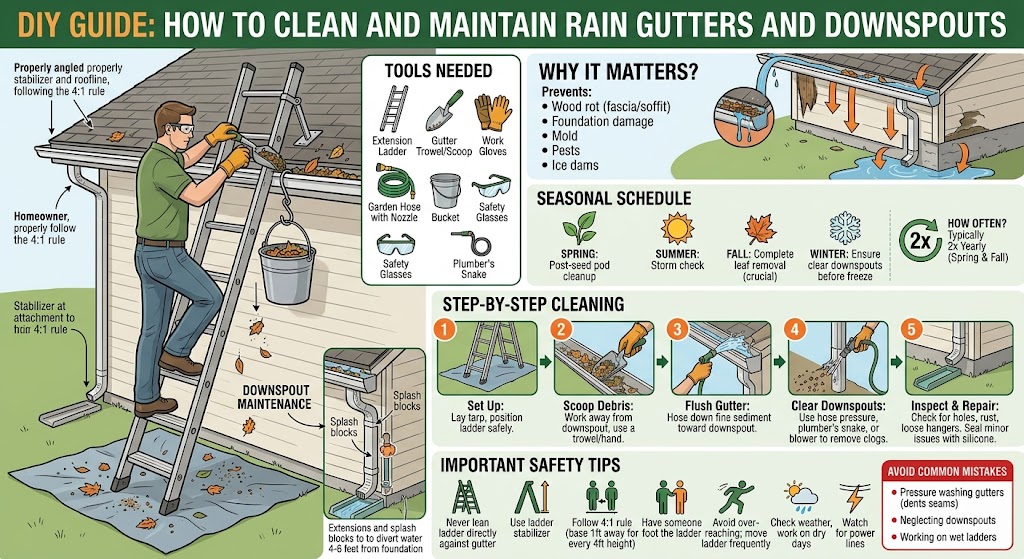
How to Clean and Maintain Rain Gutters and Downspouts: Step-by-Step DIY Guide | Tricks and Tips for Life
How to Clean and Maintain Rain Gutters and Downspouts: Step-by-Step DIY Guide
Learn how to clean and maintain rain gutters and downspouts with this step-by-step DIY guide, including tools, safety tips, and a seasonal maintenance schedule.
Home » Article » Diy » How To Clean And Maintain Rain Gutters And Downspouts Step By Step Diy GuideNobody wakes up excited to clean their gutters. It's dirty, it's a little scary if you don't love ladders, and it always seems to fall to the bottom of the to-do list until water starts pouring over the side of the house during a storm. But here's the thing: a clogged gutter system is one of the sneakiest ways a home starts falling apart. Water backs up, seeps under the roofline, and soaks into the fascia board, and before you know it, you're dealing with rot, mold, or a cracked foundation instead of a simple afternoon chore.
The good news is that cleaning and maintaining your gutters and downspouts isn't complicated. It just takes the right tools, a bit of patience, and a system you can repeat twice a year. This guide walks through the entire process from start to finish, so by the end you'll know exactly what to do, what to avoid, and how to keep your gutters working the way they're supposed to for years.
Why Gutter Maintenance Actually Matters
Gutters have one job: catch rainwater off the roof and steer it away from your home's foundation. When they're clogged with leaves, twigs, shingle grit, and that weird slimy sludge that seems to appear out of nowhere, they stop doing that job. Instead of directing water away, they let it spill over the edge and pool right next to your foundation, or worse, back up under your roof shingles.
Over time, this leads to problems that are far more expensive than a Saturday morning spent on a ladder:
- Wood rot on the fascia and soffit boards
- Basement or crawlspace flooding
- Cracked or shifting foundations from saturated soil
- Ice dams in colder climates that force water under roof shingles
- Pest infestations, since standing water and rotting leaves attract mosquitoes, birds, and rodents
- Landscaping damage from overflow washing out mulch and plants
A twenty-minute gutter check a couple times a year is a lot cheaper than fixing any of the above.
How Often Should You Clean Your Gutters?
Most homes do fine with a thorough cleaning twice a year: once in late spring after trees have finished dropping seed pods and flower debris, and again in late fall after the leaves have come down. If your property is surrounded by tall trees, especially pines or oaks, you may need to check them three or four times a year since needles and small leaves clog gutters fast and don't always blow away on their own.
A quick way to tell if it's time: walk around your house after a rainstorm and watch what the water is doing. If it's flowing evenly out of the downspouts and off the edge of the gutter in a controlled way, you're fine. If you see water sheeting over the sides or dripping from spots along the length of the gutter, that's your sign to get up there.
Tools and Materials You'll Need
Before you climb anything, gather your supplies. Having everything ready saves multiple trips up and down the ladder, which is where a lot of accidents happen.
- A sturdy extension ladder, tall enough to reach the gutter without you standing on the top two rungs
- Thick work gloves (rubber-coated ones work best for gripping wet debris)
- A small plastic scoop or gutter trowel
- A bucket with an S-hook or rope, so you can hang it from the ladder instead of climbing down constantly
- A garden hose with a spray nozzle attachment
- Safety glasses, since debris and dirty water tend to splash back at you
- A stiff-bristle brush for stubborn grime
- A plumber's snake or a leaf blower for clearing clogged downspouts
- A tarp or old sheet to lay beneath your work area for easy cleanup
- Optional but helpful: a stabilizer or standoff attachment for your ladder, which keeps it from resting directly against the gutter and crushing it
Safety First: Don't Skip This Part
Ladder falls send tens of thousands of people to the emergency room every year, and gutter cleaning is one of the most common reasons homeowners end up on one. A few rules to live by:
- Never lean the ladder directly against the gutter. The lip can bend or snap under your weight, sending you both down. Use a ladder stabilizer bar that rests against the roofline or siding instead.
- Follow the four-to-one rule. For every four feet of ladder height, the base should sit one foot away from the wall. This keeps the angle safe and stable.
- Have someone hold the base or foot the ladder whenever possible, especially on uneven ground.
- Move the ladder often. Don't overreach to the side. It's tempting to stretch a little farther instead of climbing down and repositioning, but that's exactly how ladders tip.
- Check the weather. Wet leaves and a wet ladder are a bad combination. Wait for a dry day.
- Watch for wasp nests and power lines before you start scooping. Give both a wide berth.
Advertisement
Step-by-Step: How to Clean Your Gutters
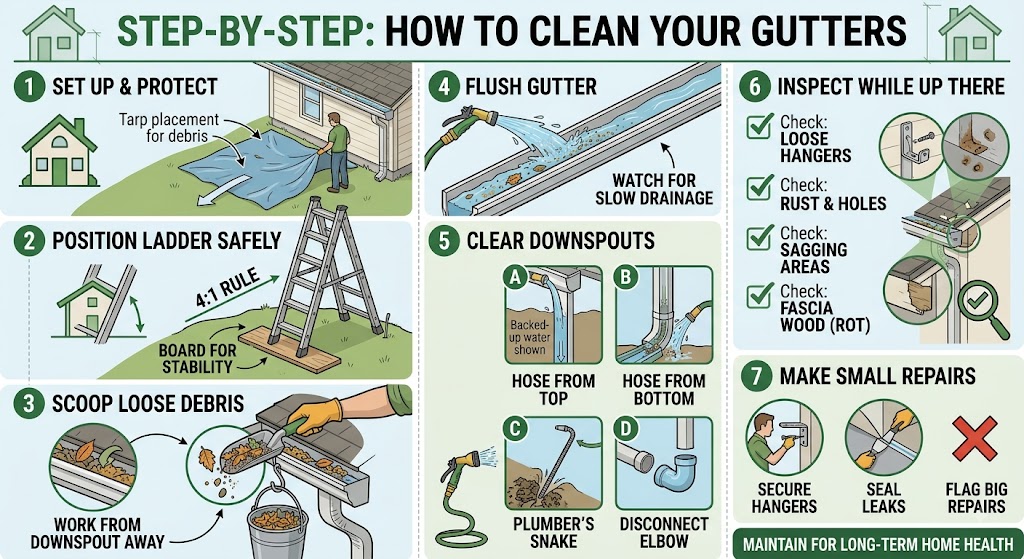
Step 1: Set Up and Protect the Ground Below
Lay a tarp along the base of the house where you'll be working. This catches falling debris and makes cleanup afterward much faster, since you can just fold up the tarp and dump everything into the yard waste bin instead of raking it out of the grass and mulch bed.
Step 2: Position the Ladder Safely
Set the ladder at the proper angle using the four-to-one rule mentioned above, and make sure it's on firm, level ground. If you're working on grass or soft soil, place a flat board under the ladder feet so it doesn't sink unevenly while you're up there.
Step 3: Scoop Out the Loose Debris
Starting near a downspout and working away from it, use your gloved hand or a plastic scoop to pull out leaves, twigs, and other loose material. Drop everything straight into your hanging bucket rather than tossing it to the ground, which keeps your tarp cleaner and saves a step later. Move the ladder every few feet rather than reaching, and work your way around the entire house section by section.
Step 4: Flush the Gutter with a Hose
Once the big debris is out, use your garden hose with a spray nozzle to flush the gutter channel from the far end toward the downspout. This washes out the fine grit, seed husks, and dirt that scooping alone won't catch. Watch how the water flows as you go. Slow drainage or pooling in a certain spot usually means the gutter has sagged there or there's a low point that needs adjusting.
Step 5: Clear the Downspouts
This step gets skipped a lot, and it's usually the actual cause of gutter overflow. Debris tends to collect right at the downspout opening or further down inside the pipe, creating a blockage that backs everything up.
Point the hose directly down into the downspout opening at full pressure. If water flows freely out the bottom, you're clear. If it backs up or doesn't drain, you've got a clog. To clear it:
- Try the hose from the bottom, running water upward to dislodge the blockage from underneath
- Use a plumber's snake fed down from the top to break up compacted debris
- For stubborn clogs, disconnect the lower elbow piece (it usually pops off or unscrews) and clear it separately before reattaching
- A leaf blower on a low setting can also push loose clogs free if the snake doesn't fully do the job
Step 6: Inspect While You're Up There
Since you're already at gutter height, take a few extra minutes to look things over. Check for:
- Loose or missing gutter hangers and brackets
- Rust spots or small holes, especially at seams and corners
- Gaps where sections join together
- Sagging areas where the gutter has pulled away from the fascia board
- Soft, discolored, or peeling wood on the fascia behind the gutter, which can signal water has been getting in for a while
Step 7: Make Small Repairs on the Spot
If you find minor issues, fix them now while you have the ladder out. Loose hangers can usually be re-secured with a few screws. Small holes or seam leaks can be sealed with a gutter-specific silicone sealant, applied to a clean, dry surface and smoothed with a putty knife. Bigger problems, like a section that's pulled away from the house or heavily rusted through, are worth flagging for a full repair or replacement rather than a quick patch.
Downspout Maintenance Beyond Cleaning
Once the pipe itself is clear, look at where the water actually goes when it exits the downspout. A lot of foundation problems trace back not to the gutter but to where the downspout dumps its water. If it's draining right next to your foundation, you're undoing all the good work you just did.
A downspout extension, a simple length of plastic or aluminum pipe, should carry water at least four to six feet away from the house. If your yard slopes toward the house instead of away from it, consider a splash block or an underground drainage pipe that channels the water further out to a spot where it can safely soak into the ground.
Should You Install Gutter Guards?
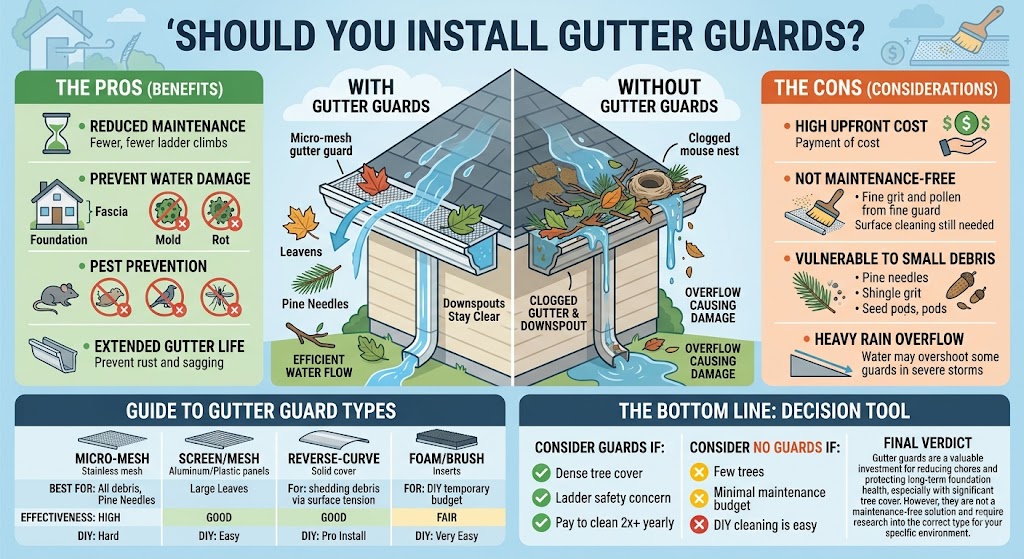
Whether or not you should install gutter guards depends on your home’s environment, your tolerance for maintenance, and your budget. Gutter guards, covers, or screens significantly reduce the volume of large debris that gets in, leading to less frequent, less messy cleanings and a longer lifespan for your system. However, they are not a "never clean again" solution. Fine debris like pine needles, roof grit, and mud can still slip through or settle on top, so you will still need to perform occasional brushing, rinsing, or inspections once or twice a year.
Advertisement
If you're deciding whether they're worth the investment, weigh how many mature trees are near your roofline, how comfortable you are on a ladder, and how much time you realistically want to spend on this chore each year.
A Simple Seasonal Maintenance Schedule
| Season | What to Do |
|---|---|
| Spring | Full cleaning after trees finish dropping seed pods and buds; check for winter damage from ice and snow load |
| Summer | Quick visual check after major storms; clear any debris from summer storms or wind |
| Fall | Full cleaning after leaves have dropped; this is the most important cleaning of the year in most climates |
| Winter | Check that downspouts are clear before freezing temperatures hit, since trapped water can freeze and crack the pipe |
Common Mistakes to Avoid
- Only cleaning the gutter and ignoring the downspout. A clean gutter with a clogged downspout will still overflow.
- Using a pressure washer at full blast. It can dent aluminum gutters or pop seams apart. A garden hose is usually all you need.
- Leaning the ladder on the gutter itself. This is how gutters get bent and how people get hurt.
- Skipping the inspection step. Small problems like a loose hanger are cheap and easy to fix now, expensive later.
- Letting debris drop onto the roof below. On multi-level homes, debris that falls onto a lower roof section needs to be swept off too, or it'll just wash back into the gutter system.
When to Call a Professional Instead
DIY gutter cleaning works well for most single-story and many two-story homes. But there are times when it makes more sense to hire it out:
- Your home is three stories or has a steep roof pitch that makes ladder work genuinely dangerous
- You've found significant rot, rust, or sagging that suggests a larger repair job
- You have health conditions that make ladder work risky, such as balance or mobility issues
- You simply don't have the time and would rather pay for the peace of mind
A professional gutter cleaning typically costs far less than the water damage repairs that come from neglecting the job, so there's no shame in handing this one off if it's not right for your situation.
The Bottom Line
Gutters and downspouts are one of those quiet home systems that nobody thinks about until they fail. The fix isn't complicated: clear debris twice a year, flush the channels, check the downspouts are actually draining, look for small damage before it becomes big damage, and make sure water is landing somewhere far from your foundation. Do that consistently, and you'll avoid the vast majority of water-related headaches that catch other homeowners off guard.
Disclaimer, No Liability: The authors and publishers of this website are not professional contractors and assume no liability or responsibility for any injury, damage, or financial loss resulting from the use or misuse of the information provided herein. All DIY projects are undertaken entirely at your own risk.
Related Articles
Advertisement
How to Clean and Maintain Rain Gutters and Downspouts: Step-by-Step DIY Guide | Tricks and Tips for Life
Comments and Questions
Please log in to leave a comment or ask a question. Don't have an account? Register here.