
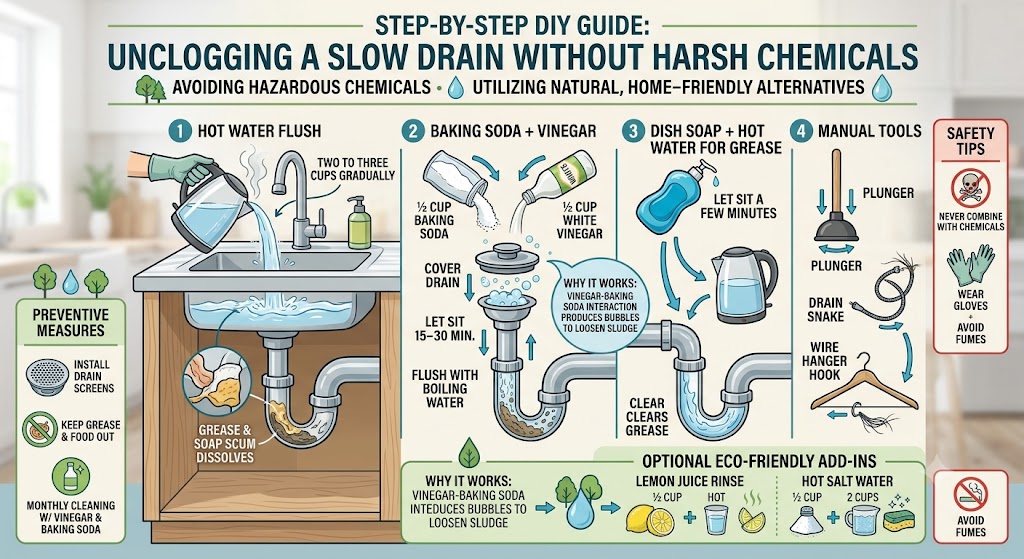
Learn 5 how to tips to unclog a slow drain safely without harsh chemicals using this step-by-step DIY guide. Simple, eco-friendly methods to clear pipes fast!
Home » Article » Diy » How To Unclog A Slow Drain Without Harsh Chemicals Step By Step Diy Guide
By avoiding hazardous chemicals and utilizing natural, home-friendly alternatives, you may safely clear a slow drain while safeguarding the environment and your pipes.
Pour two to three cups of boiling water down the drain gradually for small grease or soap scum blockages. Before adding more, let each pour finish. This releases accumulation and dissolves grease.
One of the best natural unclogging techniques is this one:
For grease clogs:
Advertisement
 Hosting Renewal Goal: $0 / $400 raised, updated daily.
Lemon Juice Rinse:
For a light degreasing and a fresh aroma, combine ½ cup lemon juice with hot water.
Hot salt water:
Dissolve ½ cup salt in 2 cups boiling water to scrub buildup.
Advertisement
Hosting Renewal Goal: $0 / $400 raised, updated daily.
Preventive measures include installing drain screens, keeping grease and food scraps out of drains, and cleaning drains once a month with vinegar and baking soda.
Disclaimer, No Liability: The authors and publishers of this website are not professional contractors and assume no liability or responsibility for any injury, damage, or financial loss resulting from the use or misuse of the information provided herein. All DIY projects are undertaken entirely at your own risk.
Advertisement

How to Unclog a Slow Drain Without Harsh Chemicals: Step-by-Step DIY Guide | Tricks and Tips for Life
Comments and Questions
Please log in to leave a comment or ask a question. Don't have an account? Register here.