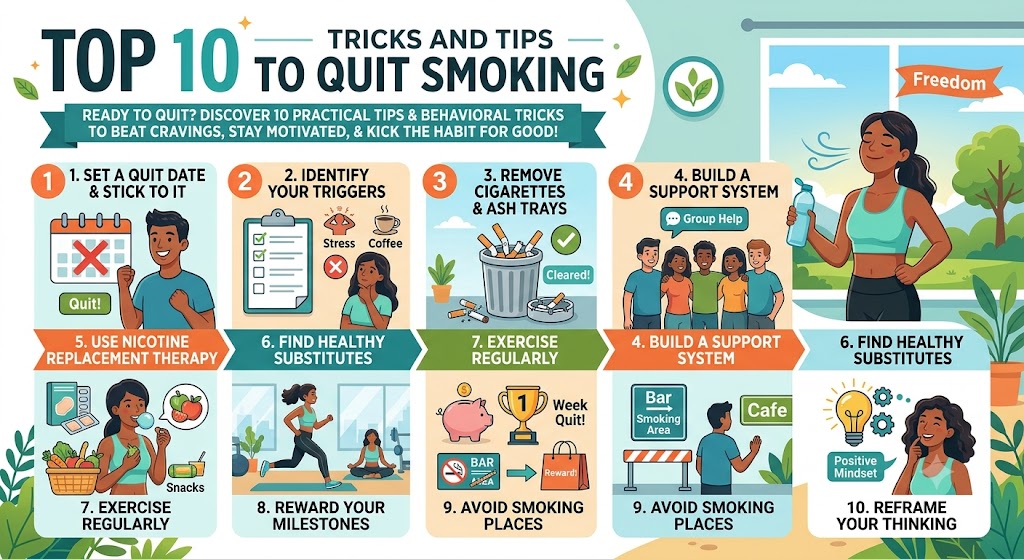
Top 10 Tricks and Tips To Quit Smoking
This article is a little extensive but is a personal favorite of mine. I was a heavy smoker for 33 years, and I have now been nicotine-free, since 2015. If you are sincere about quitting smoking, I recommend you take the time and read the entire article.
Quitting smoking can be accomplished by a mix of preparation, support, behavioral methods, and, if necessary, nicotine replacement or medicine. Quitting smoking is a process that needs mental preparation, behavioral methods, and everyday coping skills. The most effective method combines recognizing a compelling personal motivation to stop with behavioral techniques and support resources for dealing with extreme cravings.
Find Your Reasons to Quit Smoking
- Your Pocketbook:
Significant Savings: The expenses of smoking mount up quickly. You can save thousands of dollars a year by quitting, money that you can use for personal objectives, debt repayment, or a trip.
- Your Look and Health:
Immediate Healing: Your blood pressure and pulse rate start to decrease 20 minutes after your last smoke. Enhanced Vitality: Your daily energy levels will significantly rise, food tastes better, and your sense of smell returns. Youthful Glow: Giving up stops blood vessel constriction, which causes early wrinkles and yellowed teeth.
- Convenience & Your Loved Ones:
Secondhand Safety: Keeping your kids and family safe from harmful secondhand and thirdhand smoking lowers their chance of contracting ailments like asthma and chest colds.
Ultimate Freedom: You won't have to worry about leaving social gatherings, leaving family dinners, or taking a brief smoke break outside in the bitter weather.
Prepare to Quit Smoking Before You Go 'Cold Turkey'
Quitting smoking "cold turkey" is immediately eliminating all nicotine consumption and depending only on willpower. Before your quit date, you must prepare your surroundings, learn coping mechanisms for severe withdrawal symptoms, and establish a support system if you want to be successful.
A cold turkey quit requires a number of calculated preparations, including:
- Choose a Date and Get Your Space Ready:
Select the appropriate moment:
Select a time in the upcoming month, preferably during a stress-free period (avoiding significant holidays or pressing project deadlines). Clean house: Get rid of all cigarettes, lighters, and ashtrays the day before your stop date.
Get rid of odors: Vacuum or clean carpets and furniture to get rid of triggers, and wash clothing that smells like smoke.
Clear the automobile: Make sure your car is completely clean to eliminate the smoke odor.
- Determine Triggers and Make Replacement Plans:
Identify your trends: Jot down the precise time, location, and reason you often smoke. Coffee in the morning, driving, and social events are typical triggers.
Modify your habits: Change your regimen. If you typically smoke after dinner, get up right away, do the dishes, or take a little stroll.
Keep your mouth occupied: To fulfill oral fixations, stock up on sugar-free gum, hard candies, mints, sunflower seeds, or raw veggies (like carrots).
- Build a Support Network:
Notify your circle: Share your quit date with friends, family, and coworkers. Since nicotine withdrawal can make people irritable, ask for their tolerance.
Find a friend: Ask a friend who smokes to stop smoking with you, or at the very least, ask them to refrain from smoking in your presence.
Make use of expert resources: Make contact with specialized support services prior to experiencing severe withdrawal. The PA Free Quitline and the Pennsylvania Department of Health collaborate to provide free tools and coaching. Additionally, you can use national resources like the Smokefree.gov website for text assistance and daily advice.
- Manage Cravings:
Recognize the timeline: The first week, especially the first three days, is when nicotine withdrawal symptoms are most severe, although impulses usually go away in three to five minutes.
Learn the "4 Ds": Use these strategies to overcome cravings:
Delay: The urge will often peak and then subside after five to ten minutes.
Breathe Deeply: Inhale deeply three times.
Drink Water: Take a leisurely sip.
Do Something Else: Call a buddy, play a mobile game, or take a little stroll to divert your attention right away.
- Monitor Your Health:
Anticipate a slight increase in weight: quitting often results in an average weight gain of 7 to 10 pounds. Instead of depending on rigid, restrictive diets, fight this by staying active and munching on nutritious, low-calorie meals.
If necessary, take into account alternatives: Do not be afraid to talk to your doctor about utilizing FDA-approved methods like Nicotine Replacement Therapy (NRT) or prescription drugs if quitting suddenly becomes too tough.
Advertisement
 Hosting Renewal Goal: $0 / $400 raised, updated daily.
Consider Nicotine Replacement Therapy When you Quit Smoking
Nicotine Replacement Therapy (NRT) offers regulated doses of nicotine without the harmful chemicals and tar included in cigarettes. By reducing physical withdrawal symptoms and cravings, it can almost quadruple your chances of successfully quitting, freeing you up to concentrate on eliminating bad behaviors.
- Types of NRT Available:
Patches: Release nicotine gradually and steadily over the course of a day. Excellent for steady baseline support.
Gum And Lozenges: Are quick-acting choices that you can use in the event of an unexpected urge. accessible over-the-counter.
Prescription-Required: Inhalers and nasal sprays simulate the physical hand-to-mouth or quick-relief effects of smoking.
- How to Use It Effectively:
Start Right Away: Start NRT one to two weeks in advance or on the day you have set aside to stop.
Obtain The Appropriate Dosage: A higher-strength dosage (such as 4 mg gum instead of 2 mg) can be required if you smoke a lot (for example, within 30 minutes of waking).
Wean Off Gradually: Take NRT for eight to twelve weeks, then gradually cut back on your dosage until you are no longer in need of it.
Combine for improved outcomes: To control breakthrough cravings, many patients combine a long-acting NRT (like the patch) with a short-acting NRT (like gum or lozenges).
- Who Should Consult a Doctor:
If you have a history of cardiac problems, are pregnant, or are under the age of 18, you should always speak with a healthcare professional before using NRT.
Visit Smokefree.gov or the American Cancer Society Guide to learn about resources and personalized quitting programs. Through the PA Free Quitline, you may also get free, local coaching and support if you live in Pennsylvania.
Learn About Prescription Pills That Can Help You Quit Smoking
Varenicline and Bupropion are two FDA-approved medications that are quite successful in helping people quit smoking. By reducing withdrawal symptoms and nicotine cravings, they increase your chances of successfully quitting by two or even three times.
- Varenicline (Brand Name: Chantix):
How it works: Varenicline is a non-nicotine pill that does two things in the brain: it blocks nicotine receptors (making a cigarette feel less satisfying) and partially stimulates those receptors (to reduce withdrawal).
Usage: Usually started 1 to 2 weeks before your quit date. Treatment typically lasts for 12 weeks, though it can be extended.
Side Effects: Nausea, sleep issues, and vivid dreams.
- Bupropion (Brand Names: Zyban, Wellbutrin SR):
How it works: Bupropion is an extended-release antidepressant that acts on brain chemicals related to nicotine cravings. It does not contain nicotine.
Usage: Best started 1 to 2 weeks before your planned quit date. The standard treatment is 12 weeks, but it can be continued longer to prevent relapse.
Side Effects: Dry mouth, trouble sleeping, and headaches.
- A Complete Quitting Plan:
Your chances of long-term success are significantly increased when you combine these drugs with behavioral therapy and support services. Due to its excellent efficacy, varenicline is frequently advised as a first-line therapy.
Visit Smokefree.gov to learn more about available quitting aids or speak with your primary care physician to determine which drug is best for you.
When You Quit Smoking Lean on Your Loved Ones
One of the best ways to effectively stop smoking is to rely on loved ones. In addition to helping you establish new, smoke-free routines and hold you accountable when cravings arise, friends, family, and support networks may offer vital encouragement throughout withdrawal.
- How to Lean on Your Loved Ones:
Establish Clear Expectations: Make sure your family is aware of your stop date and what they can do to support you.
Request Distractions: Arrange smoke-free activities like watching a movie, going for a stroll, or playing board games, or ask loved ones to call you during difficult cravings.
Express Your Emotions: Ask for tolerance while you manage mood swings during early withdrawal, and be honest if you are feeling agitated.
Establish a Support Group: In order to avoid depending solely on one individual to help you get through difficult times, let other people in your circle know.
Advertisement
Hosting Renewal Goal: $0 / $400 raised, updated daily.
Give Yourself a Break When You Quit Smoking
One of the most important aspects of stopping smoking is giving yourself a break. It recognizes that managing cravings is draining and that smoke was probably a coping strategy for stress. Give yourself grace, steer clear of really stressful circumstances whenever you can, and keep in mind that every step you take toward quitting smoking is a significant accomplishment.
- Reasons to Take a Break for Yourself:
Replacement: You gave up a daily habit, not simply an addiction. Smoking breaks were frequently used as opportunities to stop, go outdoors, take a deep breath, or mingle. You may maintain that crucial downtime by taking a non-smoking break.
Handling Cravings: Use relaxing methods like stretching, deep breathing, or drinking a cool glass of water when an impulse strikes. Usually lasting only a few minutes, the urge is fleeting.
Patience and Grace: Don't be hard on yourself if you make mistakes. A mistake is not a sign of failure, but rather a chance to identify your triggers and keep going.
- Healthy Alternatives for Breaks:
The Five-Minute Escape: Stretch your arms and legs, listen to your favorite song, or go outdoors for some fresh air.
Mindful Breathing: Imagine your lungs full with clean, fresh air as you take 10 deep, deliberate breaths.
Keep your hands occupied by doodling, playing a fast game on your phone, or imitating the well-known hand-to-mouth action with an object like a stress ball or straw.
Change the Procedure: Take a relaxing cup of tea or go for a walk around the block as an alternative to your typical smoke break.
Quit Smoking and Avoid Alcohol and Other Triggers
One of the finest things you can do for your health is to stop smoking, but the hardest part is usually controlling the triggers that make you want to light up, especially alcohol. Nicotine cravings become extremely strong when you drink since it lowers your inhibitions and activates your brain's reward circuits.
- The Alcohol Connection: The Significance of Alcohol as a Trigger:
Nicotine and alcohol are chemical best mates. Nicotine is a stimulant, whereas alcohol is a depressant. When you take both together, the sedative effects of alcohol are counteracted by nicotine, resulting in a transient "high" that your brain soon becomes used to.
If you're serious about giving up smoking, you might want to give up alcohol completely for the first two to four weeks. Your physical withdrawal from nicotine peaks at this time, and cutting back on alcohol helps you maintain your willpower when you need it most.
- Your Social Situation Action Plan:
Use these techniques to safeguard your progress if you decide to drink or are in a social situation where smoking and drinking are prevalent:
Change Your Drink: If you often have a beer with a cigarette, consider switching to a non-alcoholic mocktail, a cocktail, or a glass of wine. The trigger is lessened by breaking the particular sensory combination.
Modify Your Environment: If smoking is prohibited inside, stay inside the restaurant or bar. It is a trap to go outside to the patio or smoking area "just to talk" since lingering smoke and witnessing other people light up will cause an immediate reaction.
Hold your drink with your smoking hand to keep your hands and mouth occupied. To fulfill the oral fixation, always have a pack of toothpicks, hard candies, or mints in your pocket.
Find an Ally: Inform your pals that you have stopped drinking before you start. A good buddy won't give you a puff and will assist in holding you responsible.
Advertisement
Hosting Renewal Goal: $0 / $400 raised, updated daily.
When Quitting Smoking, Consume Fruits and Vegetables
Increasing your fruit and vegetable intake greatly improves your chances of quitting smoking. According to studies, smokers who regularly consume produce are three times more likely to abstain from tobacco for at least 30 days since they help sate cravings and give smokes an unpleasant aftertaste.
- Why Vegetables and Fruits Are Beneficial:
Worsens The Taste Of Cigarettes: Produce changes the tobacco's flavor, making cigarettes far less enticing.
Lessens Hunger During Withdrawal: Because of the high fiber content, you don't confuse hunger sensations with nicotine cravings.
Takes The Place Of The Hand-To-Mouth Habit: Eating crunchy veggies as a snack helps you quit the habit of smoking by using your mouth and hands.
Restores Essential Nutrients: Fruits and vegetables actively restore the body's stores of vitamin C and other antioxidants, which are depleted by smoking.
- Top Choices to Try:
Crunchy Vegetables: Cucumber slices, celery, and carrot sticks keep your tongue occupied while offering gratifying physical sensations.
Citrus and Berries: Tobacco tastes unpleasant and vitamin C levels are restored by oranges, grapefruits, and berries.
Eggplant: For some smokers, eating eggplant just before a smoke break creates a harsh aftertaste that makes them less inclined to light up.
After You Quit Smoking Choose Your Reward
One of the best ways to maintain motivation and retrain your brain is to reward yourself after you stop smoking. Celebrating accomplishments helps you deal with cravings, appreciate the challenging process of overcoming a nicotine addiction, and positively reinforce your success.
After You Quit Smoking Remember That Time is on Your Side
One of the finest things you can do for your body is to stop smoking. Your body starts mending itself after 20 minutes of your last cigarette, and this process gets stronger over time.
- The Timeline of Healing:
Your body begins to heal nearly instantly and continues to do so over time:
After 20 minutes, blood pressure and heart rate return to normal.
8 to 12 hours: Your blood's carbon monoxide levels are halved, and your oxygen levels stabilize.
48 Hours: Your taste and smell sensations significantly improve, your lungs begin to expel mucus, and carbon monoxide is entirely eliminated.
3 to 9 months: There is a 10% improvement in lung function, which significantly lessens wheezing, coughing, and shortness of breath.
1 year: Compared to a continuous smoker, your risk of heart disease and heart attacks is cut in half.
5 years, your risk of stroke decreases to the same level as someone who has never smoked.
10 Years: Your chance of dying from lung cancer is halved, and your risk of developing other cancers, such as those of the mouth and throat, is greatly reduced.
After 15 years, you have the same risk of heart attacks and heart disease as someone who has never smoked.
Disclaimer: The information provided on this website is for educational and informational purposes only and is not intended as medical advice. Always consult a qualified healthcare professional before making any changes to your diet, exercise routine, or health regimen. Reliance on any information provided on this site is solely at your own risk.
Related Articles
Advertisement

Top 10 Tricks and Tips To Quit Smoking | Tricks and Tips for Life

Comments and Questions
Please log in to leave a comment or ask a question. Don't have an account? Register here.