16 Tricks and Tips for Living Within Your Means | Tricks and Tips for Life
16 Tricks and Tips for Living Within Your Means
Discover 16 practical tips for living within your means, from smart budgeting and grocery savings to debt management and retirement planning.
Home » Article » 16 Tricks And Tips For Living Within Your MeansLiving within your means, what exactly does that mean to you? Does it mean that you have to live with absolutely nothing? Well, living within your means is simply spending less money than you earn. If you make $5,000 a month and you spend $6,000 a month, you are living way beyond your means. If your income is low, you should only be buying exactly what you need to live, not what you want to live with.
Let's take apartments, for example. Most people today move into an apartment that they find attractive. They feel that they need to keep up with the appearance of having more than what they actually do. These same people live paycheck to paycheck, and if you don't know what paycheck the paycheck is, it's basically spending your entire net paycheck for the month on your personal expenses.
In order to build for your retirement, you need to put money away. But the only way you can put money away is if you spend less money than you earn. Buying a brand new car, for example, when you're living paycheck to paycheck, is the wrong decision to make, especially if you want to put money away for retirement.
A new car is nice to have, and it makes you look like you have some money. But spending money now is only taking money away from your retirement down the road. Do you really want to live to work for the rest of your life? Instead of buying new, consider buying used; you will save lots of money. Personally, I like the idea of working to live. There is a big difference.
Now, let's talk about employment. Do you know that when the typical individual gets a raise or some additional overtime, they immediately spend the money? In truth, they should put the additional money they just made into a savings or retirement account. Just because you make more money doesn't mean you have to spend it. This is one of the most common blunders individuals make nowadays. When they reach retirement age, they have little money and are obliged to work despite the fact that they are supposed to be retired.
Advertisement
Let's take grocery shopping as another example. Are you the type of person who wanders down every aisle, grabbing whatever looks good? Or do you walk in with a strict list, knowing exactly what you'll spend before you even reach the register?
The person with the list is much more likely to be living below their means and retiring much earlier. When I shop, I know exactly what I need and where it is, meaning I only walk down the aisles that hold my items.
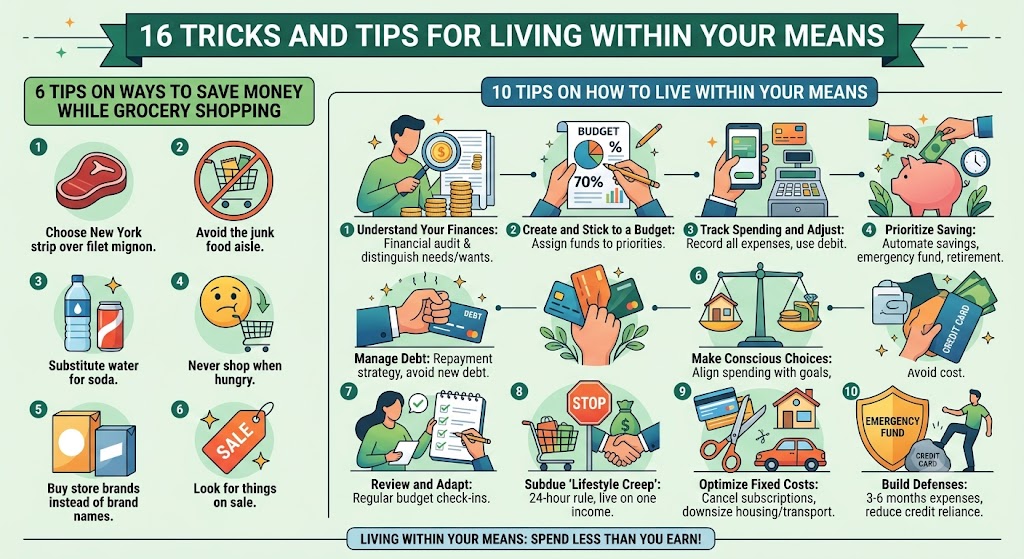
Here are 6 tips on ways to save money while grocery shopping.
- If you're buying steak buy a New York strip instead of buying the filet mignon.
- Stay away from the junk food aisle; all the junk food right now is overpriced.
- Substitute water for soda and sweet drinks; the sweet drinks aren't good for you anyway.
- Never shop when your hungry, shopping when you are hungry will only make you buy more food than you actually need.
- Store brands, why buy brand name foods when you can buy store brands? Did you know that store brands are made by the bigger manufacturers?
- Buy things on sale, buying things on sale is one of the easiest ways to save money, not just on food but on everything you may buy to begin with.
Advertisement
10 More Tips on How to Live Within Your Means
- Understand Your Finances:
Start by doing a financial audit to better understand your income and spending habits. Examine all bank accounts, credit cards, and monthly costs to see where your money goes and where you may reduce back. Estimate your monthly income properly, accounting for taxes and unpredictable wages, and distinguishing between critical necessities and discretionary desires. - Create and Stick to a Budget:
Create a budget based on your objectives and values, assigning finances to needs like housing, utilities, groceries, and transportation first. To keep your budget balanced, include savings objectives as well as discretionary expenditures. Use spreadsheets, apps, or simple lists to keep track of your expenditures and remain under your budget. Read more about Tips to Setting Up Your Budget here. - Track Spending and Adjust:
To preserve awareness of your financial habits, keep a consistent record of all spending, major and little. This helps to avoid impulsive purchases and allows you to change your budget as needed. Using a debit card instead of a credit card can help you regulate your spending by restricting your purchases to the amount you have available. - Prioritize Saving:
Set up automatic savings to guarantee that you save before you buy. Focus on creating an emergency fund, contributing to retirement accounts, and saving for future objectives. To improve financial discipline, see savings as a non-negotiable cost. - Manage Debt:
If you have debt, develop a repayment strategy to decrease interest and increase your financial freedom. Spending just what you can afford and paying with cash or debit can help you avoid collecting new debt. Read more about Tricks and Tips to Get Out of Debt - Make Conscious Choices:
Distinguish between requirements and wants to prevent lifestyle inflation or keeping up with others. Make spending decisions that are consistent with your long-term goals, such as saving for a house, vacation, or retirement. Simple methods such as meal planning, bulk shopping, and looking for cheaper alternatives will help you stretch your money farther. - Review and Adapt:
Review your budget and financial objectives on a regular basis to account for changes in income, spending, and priorities. Living within your means is a talent that develops over time with constant practice and deliberate decision-making. Understanding your money, budgeting, tracking spending, saving, managing debt, making deliberate decisions, and reviewing often will help you attain financial stability and minimize stress while still enjoying life. - Subdue "Lifestyle Creep":
The 24-hour rule states that you should never purchase non-essential products immediately. Place them in an online shopping basket or wishlist and wait 30 days, or at least 24 hours, to determine if you still require them.
Live on one income: If you are in a dual-income home (and do not have children), try banking one salary while living off the other to accelerate investments and emergency savings.
Avoid the "last chance" trap: Do not use the phrase "you only live once" to justify expenditures on weddings, birthdays, or vacations. - Optimize Your Fixed Costs:
Cancel unneeded subscriptions: Conduct a biannual subscription audit. Cancel any streaming services or memberships you haven't utilized in the past 30-60 days.
Downsize dwellings and transportation: Housing and car bills are sometimes the biggest drains on your income. Downsizing your living space or choosing a dependable old automobile over a new model saves you a significant amount of money each month.
Utilize community resources: Your local public library system offers free entertainment, instructional materials, and even streaming services. - Build Defenses:
Protect your emergency fund: Keep 3 to 6 months' worth of living costs carefully stored away. This guarantees that if your car breaks down or you have a medical emergency, you do not fall into the high-interest credit card trap.
Reduce credit reliance: Treat your credit card as currency. Only charge what you can afford to pay off in full every month. Read more about Tricks and Tips to Create an Emergency Fund
Disclaimer, Due Diligence Required: Financial markets, tax laws, and economic regulations change frequently and vary by jurisdiction. You should always perform your own independent research, complete thorough due diligence, and consult with a licensed financial advisor, certified public accountant (CPA), or legal professional before making any financial decisions or putting capital at risk. The owners and publishers of this website assume no liability for any financial losses or damages resulting from the use of this information.
Related Articles:
- Tips for 7 Levels of Investing from Low to High Risk
- Top 15 Tricks and Tips to Saving Money on Food Away From Home
- Top 10 Tricks and Tips to Save Money on Loans
- Top 10 Common Forgotten Expenses
- Tricks and Tips to Create Financial Freedom
- Tricks and Tips to Create an Emergency Fund
- Tricks and Tips to Get Out of Debt
- Tips to Setting Up Your Budget
Advertisement
16 Tricks and Tips for Living Within Your Means | Tricks and Tips for Life
Comments and Questions
Please log in to leave a comment or ask a question. Don't have an account? Register here.