Top 10 Common Forgotten Expenses
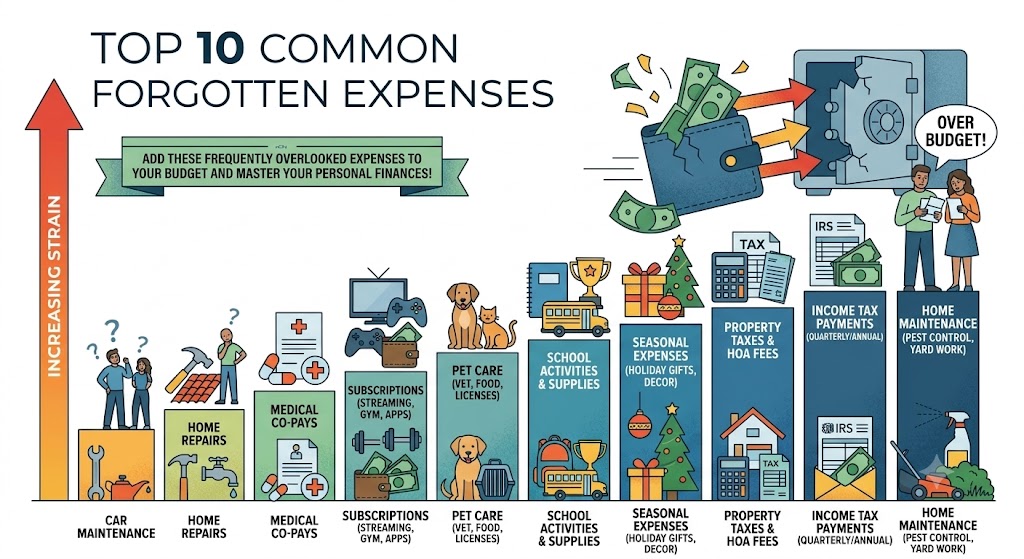
Frequently overlooked household costs like car maintenance, home repairs, medical co-pays, subscriptions, pet care, and school activities often strain budgets.
Home » Article » Top 10 Common Forgotten Expenses
Top 10 common forgotten expenses
Commonly forgotten expenses, often breaking household budgets, include irregular car maintenance (tires, oil changes), home repairs, out-of-pocket medical co-pays, subscription renewals, pet care, and school activities. Other frequent oversights include holiday gifts, convenience fees, annual professional dues, and tax preparation fees.
- Car Maintenance & Registration: Beyond gas, expenses like new tires, oil changes, windshield wipers, registration renewals, and unexpected repairs are often forgotten. You'll have money for your car when you need it if you set up a maintenance budget. Put that money aside for when you will unavoidably need it later, even if you don't have any car-related bills for the month.
- Home Maintenance & Repairs: Unexpected costs like appliance repairs, replacing HVAC filters, or hiring professionals for, say, fixing a leaking roof can significantly impact your budget. These days, purchasing a home is costly enough, but seasonal home maintenance and renovations may also be costly. A sinking fund can assist with routine upkeep and upcoming improvements, but your emergency fund is useful for any significant, unanticipated problems. A home equity loan or line of credit may also be worthwhile if you are certain that a renovation would raise the value of your house.
- Out-of-Pocket Medical Costs: Prescription drug co-pays, dental visits, vision care, and urgent care visits are frequently overlooked. You can still have to pay copays or deductibles if you have health insurance and reside in the United States. No matter where you live, costs like prescription drugs, over-the-counter medications, dental work, and eye exams are also frequently disregarded. Your emergency fund is available for unforeseen expenses, but medical expense planning can help you save money in advance if you anticipate a health-related need (such as new spectacles or a dental surgery).
- Subscription Renewals: Subscriptions like Amazon Prime, streaming services, gym memberships, and software renewals often auto-renew without notice. Pesky annual subscriptions usually tend to take folks off guard, much like auto renewals. If so, they have the potential to totally ruin your finances. Once more, set up a sinking fund to budget for recurring costs, and mark subscription renewals on your calendar so you are aware of when they are approaching.
- Gifts & Special Occasions: Expenses for birthdays, weddings, baby showers, and holiday gifts add up throughout the year. Special occasions can surprise you, whether it's for a birthday, wedding, or Christmas. Put all of your holidays, anniversaries, and birthdays on your calendar to avoid this. Look over your schedule to see if there are any special occasions before making your monthly budget. In this manner, you can circumvent it and, if needed, reduce other expenses.
Advertisement
 Hosting Renewal Goal: $0 / $400 raised, updated daily.
- Child/School-Related Costs: School supplies, field trips, extracurricular activities, uniforms, and athletic gear. A lot of people fail to consider the entire financial cost of having children. Children are incredibly joyful, but they also come with costs. In the first year alone, hospital fees, diapers, formula, child care, and clothing can total thousands of dollars. Increase your emergency savings and create a baby fund if you're considering having children to help with some of the expenses. It is essential to save aside money for your kids' future educational costs, such as those associated with college or trade school. But many of the costs associated with education arrive far earlier. Field excursions, sports teams, music classes, and back-to-school shopping may quickly mount up while your child is still in elementary school. For any supplies, equipment, or participation fees your child might require, create a budget item labeled "school expenses."
- Pet Care: Beyond regular food, expenses include annual vet checkups, grooming, and pet sitting. Pets are an integral part of the family, but they also come with high costs, such as food, grooming, veterinary visits, licensing fees, and more. It's usually a good idea to create a distinct area in your budget for pet-related expenses because these charges arise on a frequent basis. Depending on the age and condition of your pet, pet insurance can be as low as $25 per month. If your pet becomes ill and needs thousands of dollars in medical care, it might spare you from having to make a difficult choice.
- Annual Subscriptions/Membership Dues: Fees for warehouse clubs (Costco/Sam's Club), professional associations, or roadside assistance (AAA). The easiest way to budget for annual subscriptions and membership dues is to divide large payments into smaller monthly contributions, often referred to as a "sinking fund." The average household spends more than $2,600 a year on subscriptions, so keeping track of these is essential to avoiding unexpected expenses.
- Convenience Fees & Small Fees: Out-of-network ATM fees, credit card service fees, or late fees. Convenience fees can be budgeted for by keeping note of small, regular transactions in a separate budget category, such as delivery fees, subscription auto-renewals, and service charges. To cut high-frequency delivery costs, audit subscriptions on a quarterly basis, manage spending with apps, and think about membership programs.
- Personal Hygiene & Grooming: Haircuts, beauty treatments, and, in some cases, toiletries. Haircuts, skincare products, cosmetics, and hygiene items can seem necessary for both feeling and looking well! However, they can easily fall between the cracks in your budget because they are typically not monthly expenses. To keep track of them, figure out how much you've spent on average over the last three months and use that figure to set aside money each month for personal grooming expenses.
To avoid breaking your budget, creating a "sinking fund" for these irregular, non-monthly expenses is highly recommended. A sinking fund is a strategic savings method where money is set aside incrementally over time for a specific, planned future expense. By contributing a small amount monthly, you accumulate the total cost, enabling you to pay cash, avoid debt, and avoid disrupting your regular budget for large, non-monthly purchases.
Disclaimer, Due Diligence Required: Financial markets, tax laws, and economic regulations change frequently and vary by jurisdiction. You should always perform your own independent research, complete thorough due diligence, and consult with a licensed financial advisor, certified public accountant (CPA), or legal professional before making any financial decisions or putting capital at risk. The owners and publishers of this website assume no liability for any financial losses or damages resulting from the use of this information.
Related Articles:
Advertisement

Top 10 Common Forgotten Expenses | Tricks and Tips for Life

Comments and Questions
Please log in to leave a comment or ask a question. Don't have an account? Register here.