The Psychology of Convenience Spending | Tricks and Tips for Life
The Psychology of Convenience Spending | Tricks and Tips for Life
Discover the hidden psychology of convenience spending. Stop impulse buying, escape subscription traps, and regain control of your personal budget today. Unpacking how subscription traps, delivery apps, and impulse buys drain a paycheck before it even hits the bank account.
Home » Article » No Fail Budgeting Guide » The Psychology Of Convenience SpendingThe Psychology of Convenience Spending
Convenience Spending:
Convenience spending can make life so much easier, while at the same time draining your bank account and destroying your budget. Small, seemingly insignificant, and harmless expenses add up over time. While a whole time working against your financial stability and long-term goals. Yet modern spending encourages the opposite. With easy access to goods and services encouraging impulsive spending, leaving you wondering where you spent the money and how it disappeared so fast.
From subscriptions to delivery apps and impulse buys, convenience spending feels relatively harmless in the moment. But convenience spending can quickly drain your paycheck before it even hits your bank account. The key lies in the psychology that exploits human beings to make them feel spending is effortless and inevitable. The good news here is that recognizing these hidden costs and making smart financial decisions opens up the door to meaningful savings.
Why it Feels Harmless:
It feels harmless because small recurring charges seem insignificant individually; these charges can range from $10 to $20 a month for subscriptions or even $5 to $10 delivery fees. These fees are often automatic, so they feel relatively painless, that is, until the bill arrives. This separation from the decision point decreases your resistance, making it easier to continue paying without reevaluating the usage.
Advertisement
The Subscription Trap:
Subscription traps like streaming platforms, fitness apps, memberships, and digital products can auto-renew without your awareness. It's been shown through behavioral economics that frictionless payments, combined with a cumbersome cancellation policy, keep people subscribed. The endowment effect, once you have the service, makes you feel like you own it and gives you the status quo bias, pushing you to keep the subscription rather than change it. The I already paid for this known as the sunk cost fallacy, further enhances contributions to payments of the subscriptions.
Delivery and Impulse Buying Psychology:
Have you ever noticed all the stuff that is in the aisle at the store at the checkout counter? Well, those are considered impulse buys. As well as vast delivery apps and one-click checkouts, they all remove the mental pause between desire and the purchase. The instant gratification loop is the speed and convenience that makes small purchases feel urgent and rewarding.
Retailers use in-store and online tactics like scent, premium placement, and dynamic pricing all to trigger unplanned buys. On top of everything else manufactures use shrinkflation, which is the reduction of the size of a product while keeping the product the same price, often hiding fees with a 15% to 30% markup. This makes the cost feel like you are getting a bargain, so you don't track it until it's too late.
Advertisement
Cumulative Impact
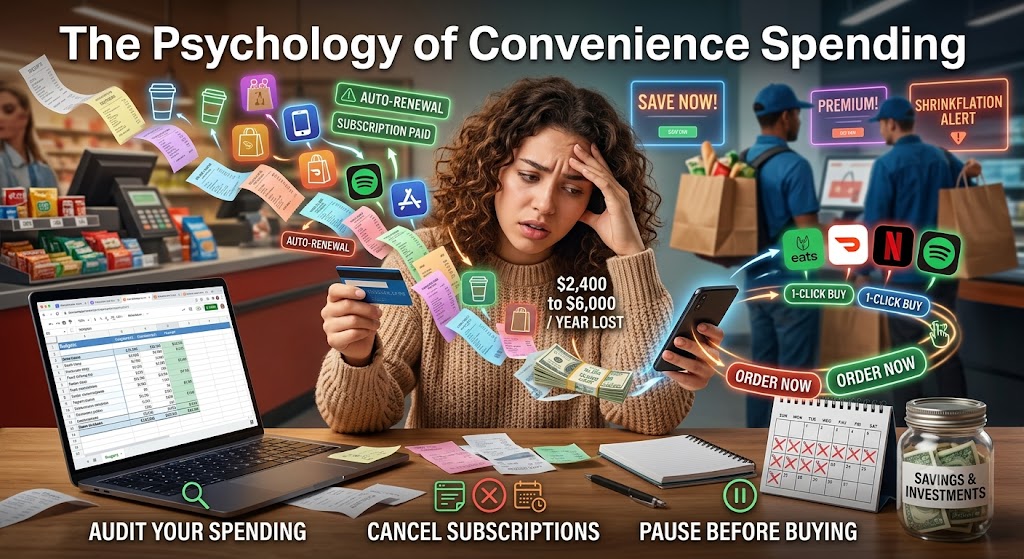
Over time, these small decisions add up. An easy five to seven subscriptions at $10 to $20 each can exceed $100 a month easily. Delivery fees and impulse purchases multiply the cost of meals and goods that can damage most budgets. That's an easy $200 to $500 a month in convenience spending. That's $2,400 to $6,000 a year, which could have gone into your savings, investments, paying off debt, and/or emergencies.
How to Regain Control of Your Spending
- Audit Your Spending: review the last one to two months to see what you are actually spending your money on.
- Cancel Unused Subscriptions: if you haven't used a service in a month, it's more than likely not worth keeping that service. So it's time to cancel that service.
- Track Delivery Fees: compare the sticker price with your final cost and cancel all the higher-priced markups.
- Pause Before Buying: use a cooling-off period. Simply wait 24 hours before impulse buying anything. Remember impulse buying can cost you dearly.
- Review Auto Pay Schedules: look at all your auto pay schedules. Cancel and/or adjust any recurring charge to avoid surprises every month.
Pro Tip: Convenience is a double-edged sword and can neutralize your cash. It can take time and effort to put an end to the waist but it will be well worth it; without awareness and discipline, it can be a silent budget killer. The goal isn't to eliminate convenience in its entirety; it is to be intentional about every dollar you spend. Because once that dollar's spent, it is gone for good.
Back to No Fail Budgeting Guide category page to read more.
Disclaimer, Due Diligence Required: Financial markets, tax laws, and economic regulations change frequently and vary by jurisdiction. You should always perform your own independent research, complete thorough due diligence, and consult with a licensed financial advisor, certified public accountant (CPA), or legal professional before making any financial decisions or putting capital at risk. The owners and publishers of this website assume no liability for any financial losses or damages resulting from the use of this information.
Related Articles:
- 16 Tricks and Tips for Living Within Your Means
- Tips for 7 Levels of Investing from Low to High Risk
- Top 15 Tricks and Tips to Saving Money on Food Away From Home
- Top 10 Tricks and Tips to Save Money on Loans
- Top 10 Common Forgotten Expenses
- Tricks and Tips to Create Financial Freedom
- Tricks and Tips to Create an Emergency Fund
- Tricks and Tips to Get Out of Debt
- Tips to Setting Up Your Budget
Advertisement
The Psychology of Convenience Spending | Tricks and Tips for Life
Comments and Questions
Please log in to leave a comment or ask a question. Don't have an account? Register here.